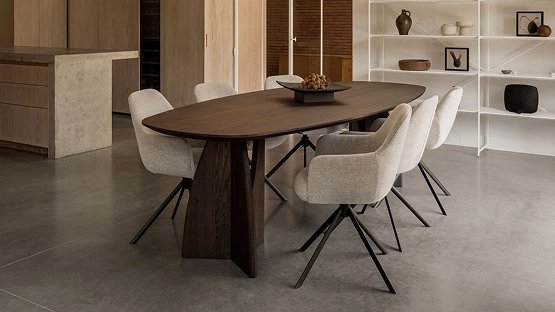
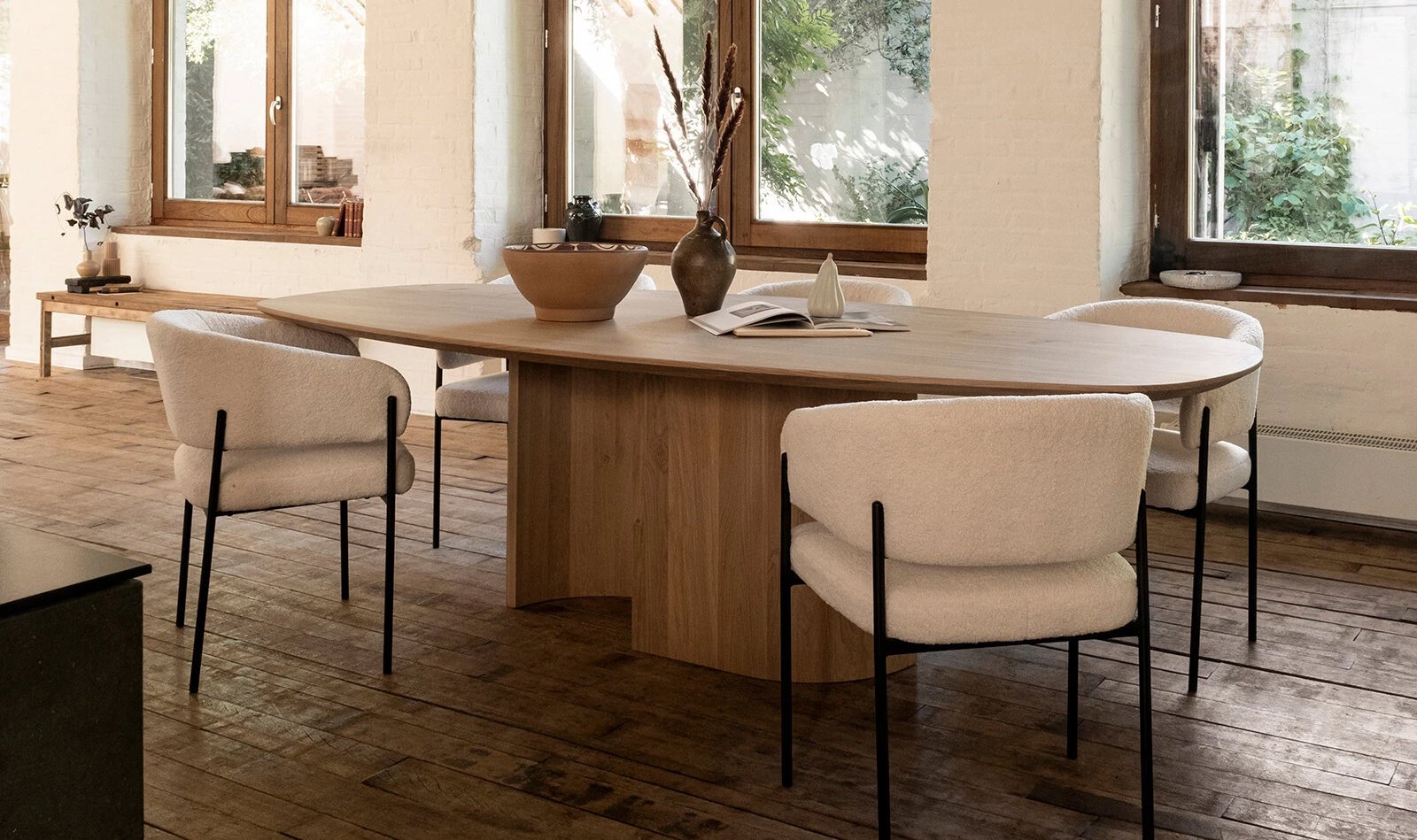
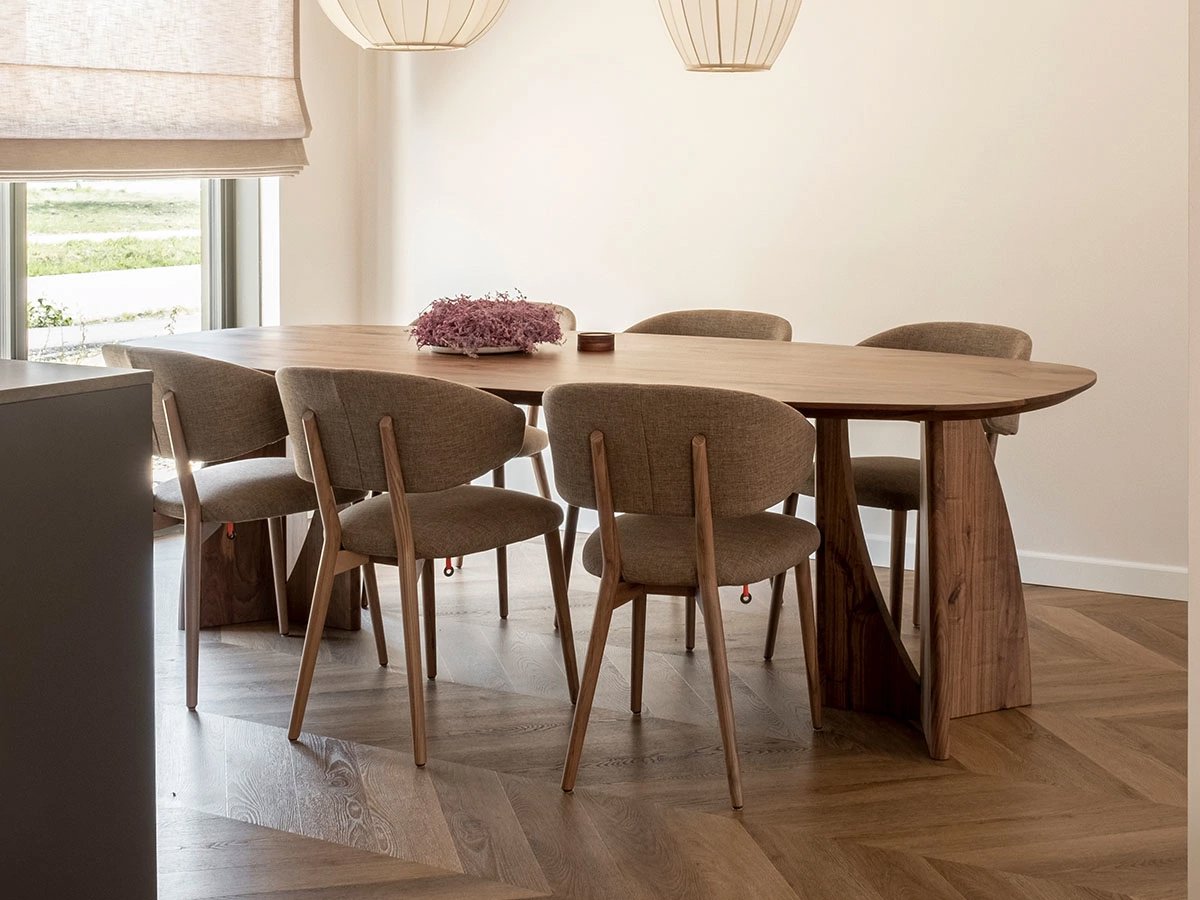
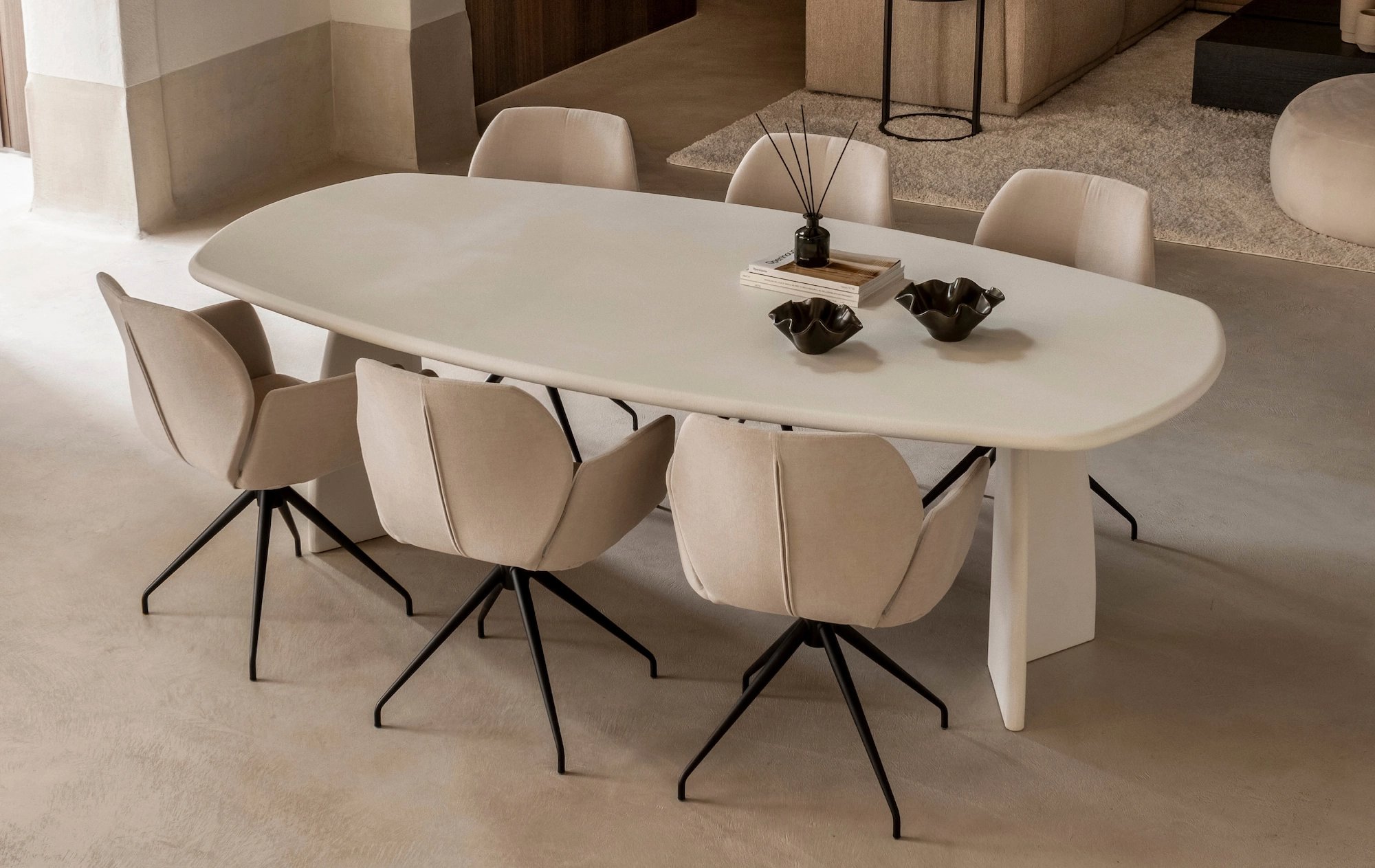
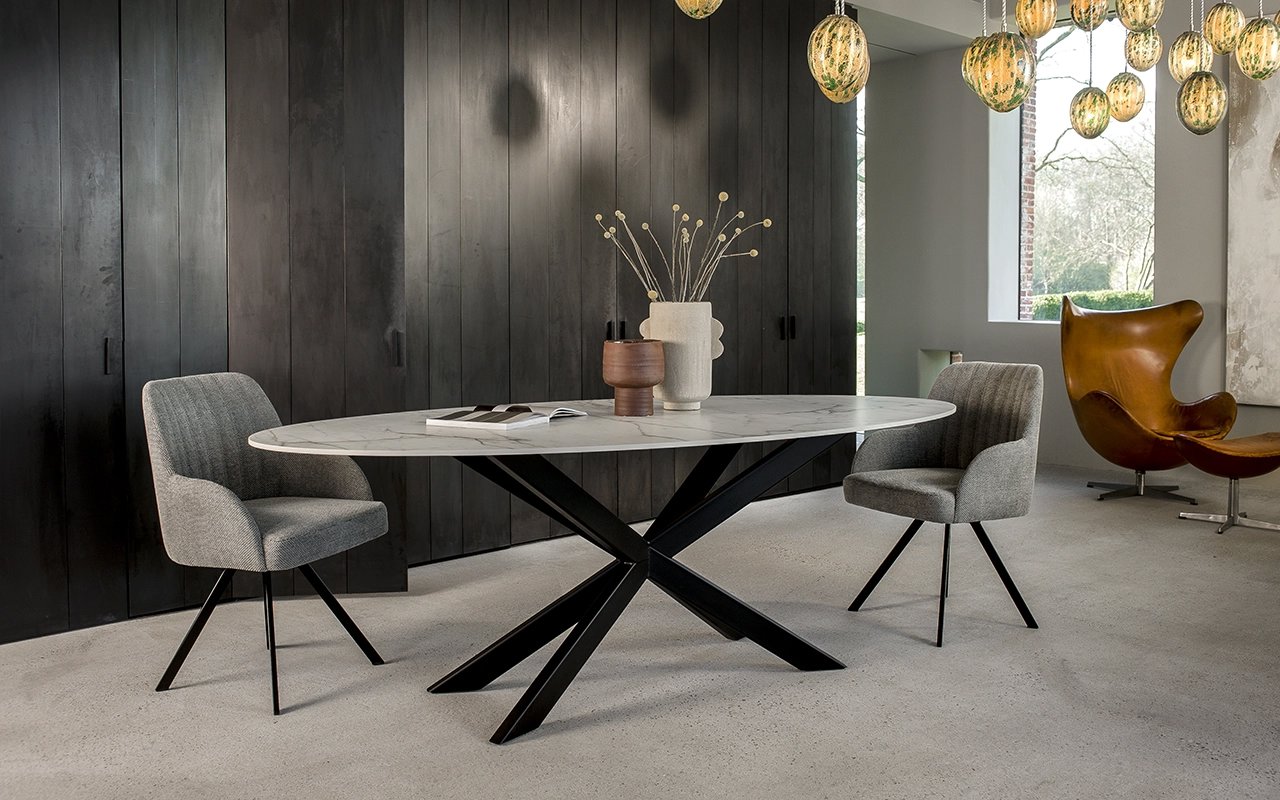
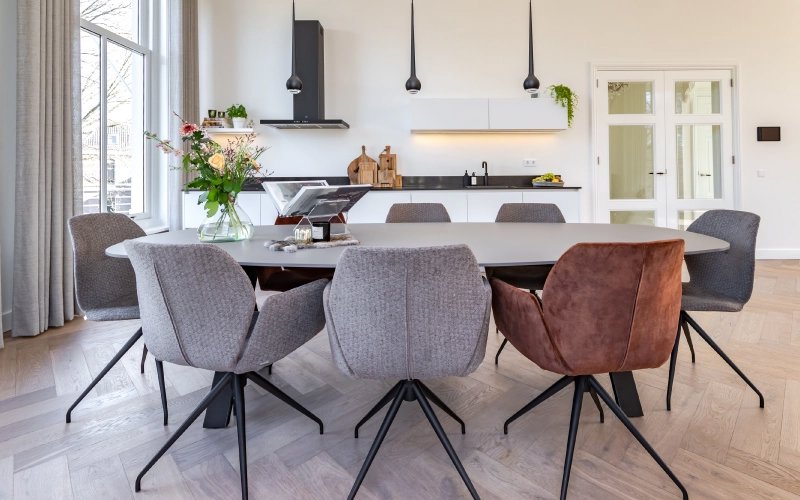
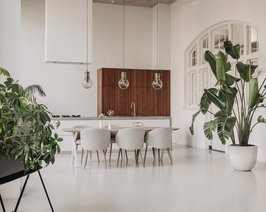
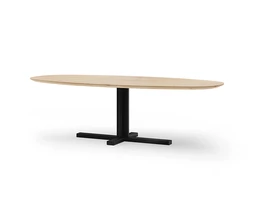
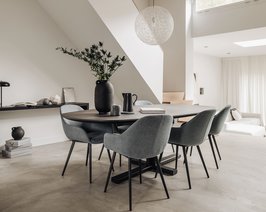
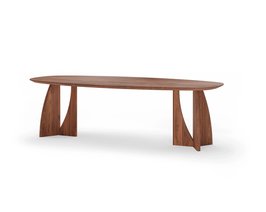
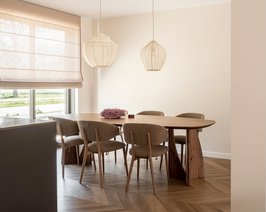
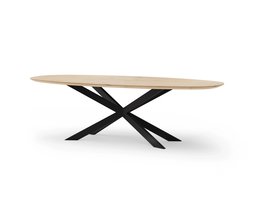
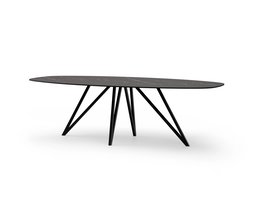
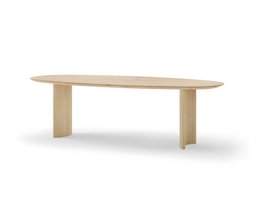
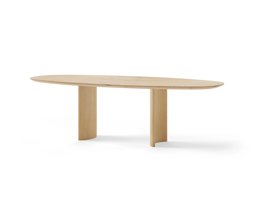
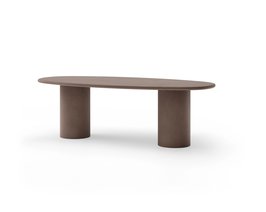
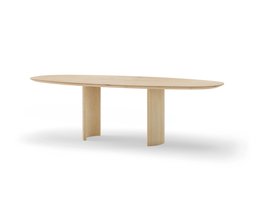
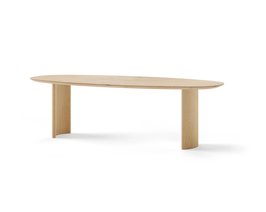
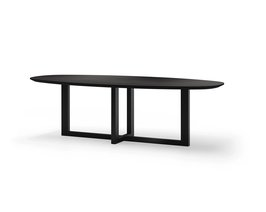
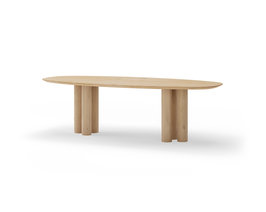
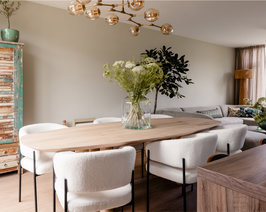
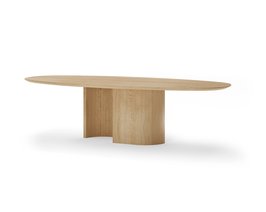
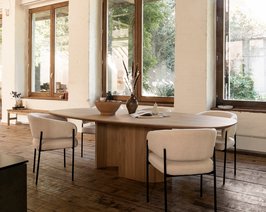
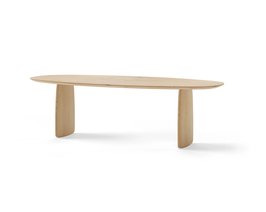
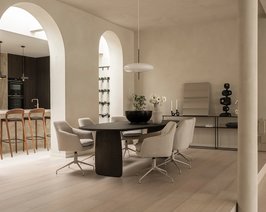
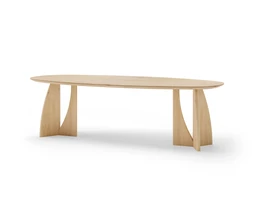
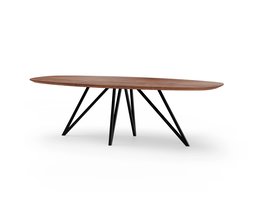
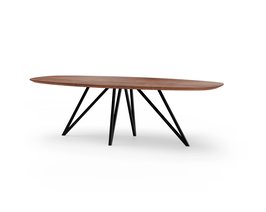
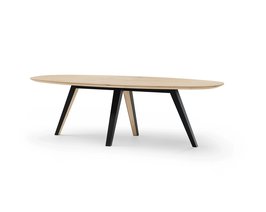
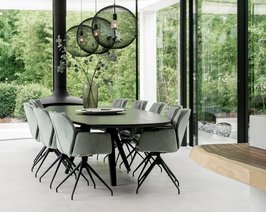
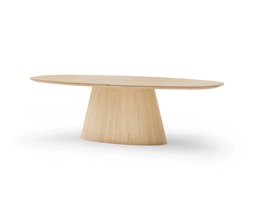
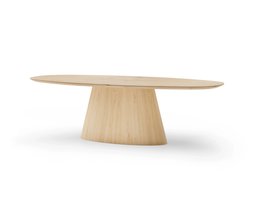
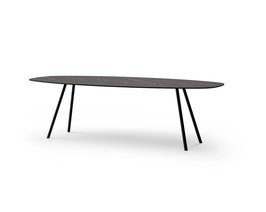
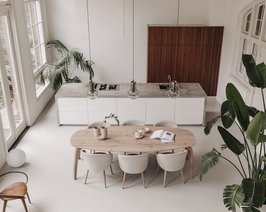
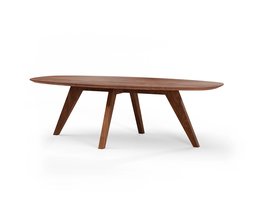
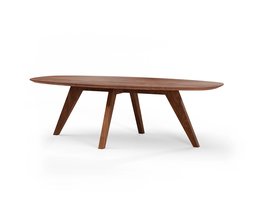
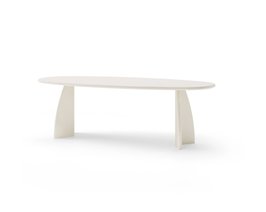
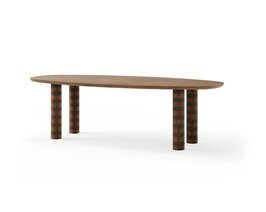
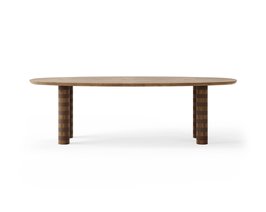
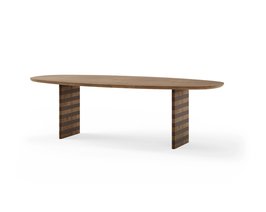
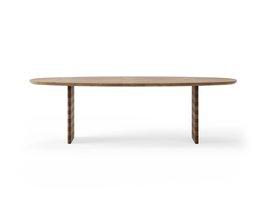
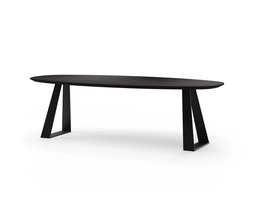
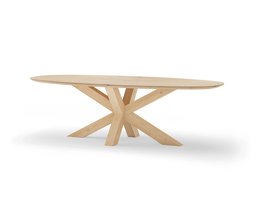
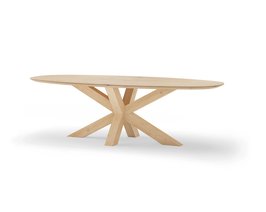
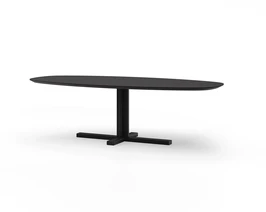
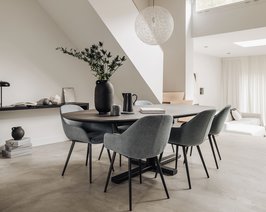
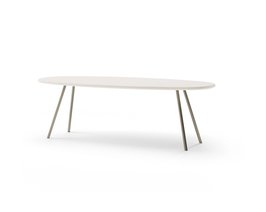
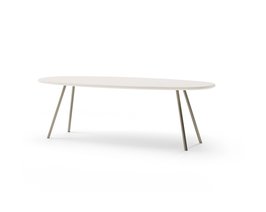
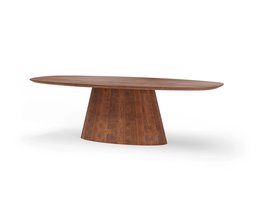
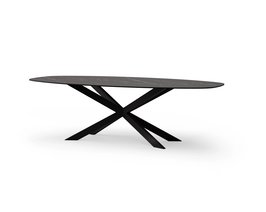
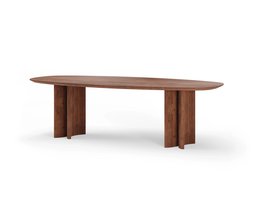
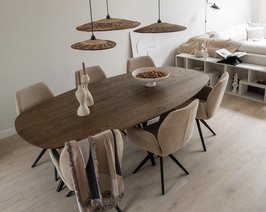
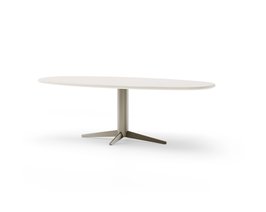
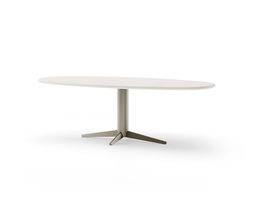
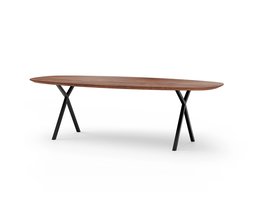
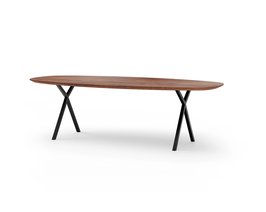
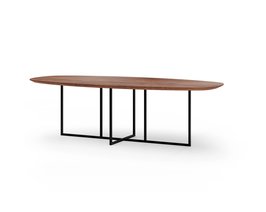
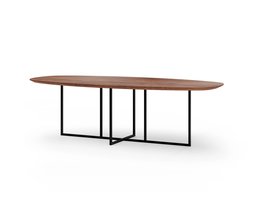
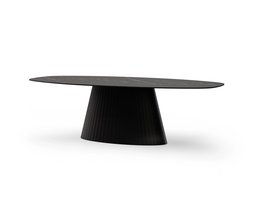
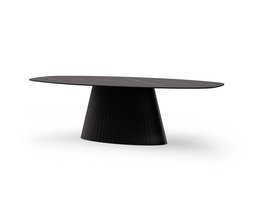
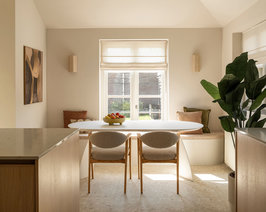
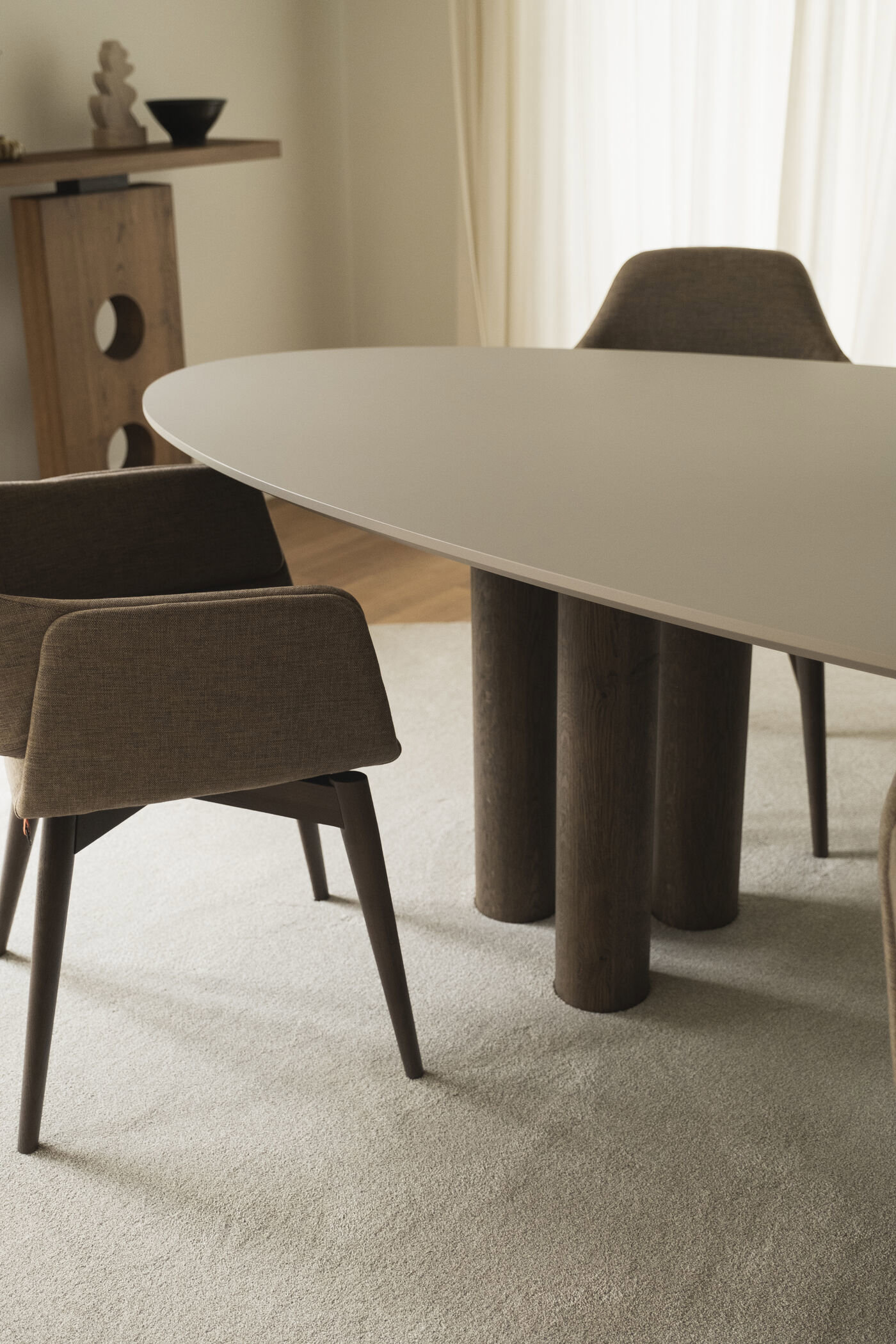
Danish oval, developed by Table du Sud
“At Table du Sud, we wanted to create a table shape that looks soft while making optimal use of the available space. With that idea in mind, we developed and launched the Danish oval dining table in 2019, inspired by the traditional oval table,” explains Teun Antonissen, owner of Table du Sud.
What makes a Danish oval dining table practical?
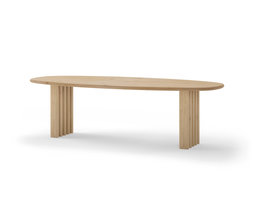
The difference between an oval dining table and a Danish oval dining table lies purely in its shape. An oval table gradually narrows from the center outward, whereas a Danish oval table features relatively straight long sides and rounded ends. This results in:
- More usable table edge: because the long sides taper more subtly than on a traditional oval table.
- More usable table ends: depending on the size, chair width, and base design, a chair can comfortably be placed at the end of the table as well.
- No sharp corners: the rounded ends allow for smooth movement around the table.
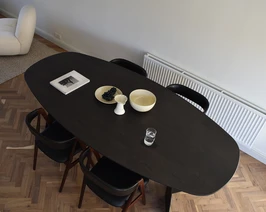
- Easy interaction at the table: the shape invites people to sit not only opposite each other, but also diagonally across.
All in all, the Danish oval table is a design where practical everyday use and thoughtful design come together seamlessly.
Which size Danish oval table is right for you?
Choosing the right dimensions depends on more than just the number of seats. The width of your chairs, the required clearance space around the table, and the positioning of the base all play a role.
Be sure to determine beforehand:
- how many chairs you plan to use on a daily basis;
- whether you choose chairs with or without armrests;
- whether you also want to sit at the table ends;
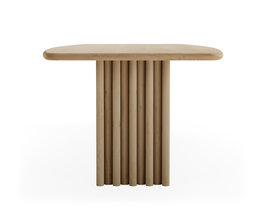
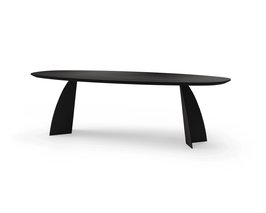
- which base offers sufficient legroom and complements your desired design;
- which length-to-width ratio best suits your dining room.
For a Danish oval table, the length-to-width ratio determines both the shape of the top and the available seating space. Compare different dimensions in our 3D-configurator, discover which style fits your needs, and see how many chairs fit per table size. Match the material and color with your dining chairs or dining bench for a realistic preview of the final look.
A Danish oval table in your style
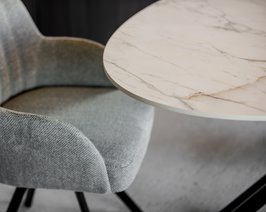
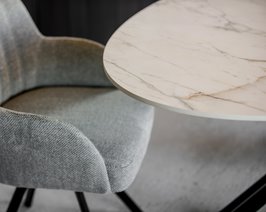
The material of your tabletop and the chosen base define the character of your Danish oval table. You can choose from oak, walnut, Fenix unicolor, ceramic, or a concrete-look finish. Next, combine your tabletop with a wooden or steel base, for example.
All these choices influence not only the ambiance in your dining area, but also its practical everyday maintainability. Each material possesses its own unique characteristics and qualities. On our materials page, you can discover which option suits you best. With so many possibilities, finding the perfect combination can feel challenging, especially when taking into account the colors and materials of your floor, kitchen, and walls.
That is why you can order our free color samples to see at home which materials and colors best match your interior. Would you like tailored advice? Feel free to visit one of our furniture store or book an appointment. Our interior specialists are happy to help you with personalized advice to suit your taste and lifestyle.